Showing posts with label Tech. Show all posts

Sunday, April 12, 2026

The 3 Main Ways to Invest in SpaceX Pre-IPO


The 3 Main Ways to Invest in SpaceX Pre-IPO

1. Invest in Funds That Own SpaceX Shares

  • Some mutual funds, ETFs, and private funds already hold SpaceX stock.
  • Examples include venture-style or “interval” funds.
  • These are the most accessible option for regular investors.

Downside:

  • Many of these funds trade at large premiums to their actual value (NAV).
  • You’re not just buying SpaceX—you’re buying a basket of assets with fees.

2. Buy Into Secondary Markets (Pre-IPO Share Platforms)

  • Platforms like EquityZen allow investors to buy shares from employees or early investors.
  • This gives more direct exposure to SpaceX equity.

Downside:

  • Usually limited to accredited (wealthy) investors.
  • Shares can be illiquid and hard to sell.
  • SpaceX can block transactions via “right of first refusal.”

3. Invest Indirectly Through Related Public Companies

  • Some public companies or funds have business ties or ownership stakes in SpaceX.
  • Buying those stocks gives indirect exposure.

Downside:

  • SpaceX may only be a small part of the company’s value, so returns won’t track it closely.
Please take into account that the majority of IPO's sell off post IPO and this will likely not make money for years if ever. If you are considering investing in this I would recommend placing it in the high risk category of your portfolio.

Friday, April 10, 2026

Big 6 Tech Stocks Suddenly Look Cheap- Exxon has a higher PE than NVDA?


Exxon Mobil P/E Is Now Higher Than Nvidia — What’s Going On?

2026 has been rough for Big Tech stocks, with many of the major names pulling back significantly.

Why the Drop?

It’s largely driven by massive spending on AI infrastructure (data centers, chips, etc.), which is pressuring profits in the short term.

Investors are starting to question:
When will this actually pay off?

There’s growing skepticism about whether these investments will generate near-term returns, even if the long-term story remains strong.


Valuations Are Coming Down

The underperformance of the technology sector is starting to create attractive valuation opportunities for investors.

As Goldman Sachs strategist Peter Oppenheimer noted:

“The underperformance of the technology sector is also starting to generate attractive valuation opportunities for investors, as its valuation—relative to expected consensus growth—has fallen below that of the global aggregate market.”


Meanwhile… Energy Stocks Are Rising

Because of the current oil rally driven by tensions in the Middle East, oil company P/E ratios have risen sharply—
in some cases even surpassing those of tech stocks.

That leads to a surprising headline:

Exxon Mobil P/E Is Now Higher Than Nvidia — What’s Going On?


A Shift in Valuation Dynamics

Price-to-earnings ratios in tech are falling to more reasonable levels.

In some cases, these stocks are now:

  • Cheaper relative to their own history
  • More in line with (or closer to) the broader market

But “Cheap” Doesn’t Mean Risk-Free

This creates a split narrative:

  • An opportunity (if AI investments pay off), or
  • A value trap (if returns disappoint)
How do 6 of the largest tech companies compare to each other right now?

Thursday, April 9, 2026

Satellite Stocks: A Complete Guide to Investing in the Space Economy


Satellite Stocks: A Complete Guide to Investing in the Space Economy

The satellite industry has quietly become one of the most important pillars of the modern global economy. From GPS navigation and internet connectivity to military intelligence and climate monitoring, satellites are everywhere—and investors are starting to take notice.

As the space economy expands, a growing number of publicly traded companies are focused specifically on satellite technology. These range from operators of massive communication networks to firms building next-generation constellations in low Earth orbit (LEO).

This guide breaks down the key satellite stocks to watch, organized by sector, along with insights into how the industry is evolving.


Satellite Communications: The Backbone of Global Connectivity

Satellite communication companies generate revenue by providing data, voice, and broadband services across the globe—especially in areas where traditional infrastructure is limited.

Iridium Communications is one of the most established players, operating a global network of satellites that deliver reliable voice and data services worldwide.

Globalstar has gained attention through its partnership with Apple, powering emergency satellite messaging features in smartphones.

Viasat focuses on high-speed internet for aviation, military, and rural markets, while EchoStar maintains a large satellite infrastructure footprint tied to Dish Network.

Canada’s Telesat is building its next-generation Lightspeed LEO network, aiming to compete with emerging global systems.

Meanwhile, AST SpaceMobile represents one of the most speculative but exciting plays, attempting to connect standard smartphones directly to satellites.


Earth Observation: Turning Data Into Insight

Earth observation companies use satellite constellations to capture high-resolution imagery and data about the planet. This information is increasingly valuable for governments, agriculture, climate science, and defense.

Planet Labs operates one of the largest fleets of imaging satellites, capturing daily images of the Earth’s surface.

Satellogic focuses on high-frequency imaging, while BlackSky provides near real-time geospatial intelligence services.

These companies are often compared to SaaS businesses due to their recurring data subscription models, though profitability remains a work in progress for many.


Satellite Manufacturing and Infrastructure

Behind every satellite network is a complex supply chain of manufacturers and technology providers.

MDA Space is a standout in this category, known for its robotics and satellite systems, including contributions to the Canadarm.

Terran Orbital specializes in small satellite production, while Gilat Satellite Networks provides essential ground-based communication systems.

Redwire is another emerging player focused on in-space manufacturing and satellite components.

These companies are often seen as “picks and shovels” plays, benefiting from overall industry growth regardless of which satellite operators dominate.


Launch and Hybrid Space Companies

Some companies operate across multiple segments, including launching satellites and building spacecraft platforms.

Rocket Lab has become a leader in small satellite launches while also developing satellite components and platforms.

Astra Space aims to provide low-cost, rapid launch capabilities, though it remains highly speculative.


Defense Giants With Satellite Exposure

Large aerospace and defense contractors play a critical role in satellite development, particularly for government and military applications.

Lockheed Martin and Boeing both manufacture advanced satellite systems, including GPS and defense-related infrastructure.

L3Harris Technologies contributes key satellite payloads and communication technologies.

While not pure-play satellite stocks, these companies provide stability and consistent revenue compared to smaller, high-growth players.


Satellite ETFs: Diversified Exposure

For investors looking to gain exposure without picking individual winners, exchange-traded funds offer a broader approach.

ARK Space Exploration & Innovation ETF focuses on space-related innovation, including satellites.

Procure Space ETF provides more direct exposure to satellite and space infrastructure companies.


How to Think About Satellite Investing

Satellite stocks generally fall into four major categories:

  • Connectivity: Telecom-style recurring revenue (Iridium, AST SpaceMobile)

  • Data & Imaging: High-margin data businesses (Planet Labs, BlackSky)

  • Infrastructure: Hardware and systems providers (MDA Space, Redwire)

  • Launch: Enabling access to space (Rocket Lab)

Each segment carries different risk profiles, timelines, and capital requirements.


Risks and Opportunities

While the long-term growth story is compelling, many satellite companies are still in early stages and burning cash. Competition is also intensifying, especially with private giants like SpaceX dominating launch and satellite internet.

However, major tailwinds remain:

  • Expansion of LEO satellite constellations

  • Growth in direct-to-device connectivity

  • Increasing defense and geopolitical demand

  • Rising need for real-time global data


Final Thoughts

The satellite sector sits at the intersection of technology, defense, and telecommunications—making it one of the most dynamic areas in the market today.

For investors, the opportunity is clear: as demand for global connectivity and data continues to rise, satellite companies could become as essential as traditional telecom providers. The challenge lies in separating long-term winners from speculative hype.

If approached strategically, satellite stocks offer a unique way to invest in the future of the global economy—one orbit at a time.


Thursday, January 29, 2026

Meta Ai News Today- Reasons For 2025 Q4 blowout

Meta Ai News Today- Reasons For 2025 Q4 blowout

 Meta Platforms (META) is back in full bull mode.

Wall Street rushed to raise price targets after Meta crushed Q4 expectations, driven by surging ad demand and early—but increasingly measurable—returns from its massive AI investments.

Shares jumped more than 8% in premarket trading Thursday, as analysts piled in with fresh upside calls.

Big Banks Go Bigger on Meta

  • Barclays raised its price target to $800 from $770, citing a sharp rebound in advertising momentum. Revenue growth north of 30%, the firm said, has eased lingering concerns around rising costs and capital intensity.

  • UBS boosted its target to $872 from $830, maintaining a Buy rating and forecasting higher earnings estimates for 2026 and 2027 as AI monetization accelerates.

  • Bank of America lifted its target to $885 from $810, reaffirming its Buy call and pointing to tangible returns from Meta’s investment cycle.

Morgan Stanley, Jefferies, and Piper Sandler also raised targets, with Jefferies noting that Meta’s revenue surge confirms AI-driven growth is finally validating years of heavy spending.

Q4 Numbers That Changed the Narrative

Meta posted Q4 revenue of $59.89 billion and EPS of $8.88, blowing past analyst estimates of $58.59 billion and $8.02, according to Fiscal AI data.

That performance is shifting sentiment fast.

Barclays emphasized that Meta remains the undisputed leader in digital advertising, with AI providing additional upside not yet fully reflected in forecasts.

AI Payoff Is Starting to Show

UBS expects Meta’s AI strategy to materially lift earnings power over the next two years, while Bank of America highlighted the company’s ability to fund expansion internally as free cash flow is projected to turn positive in 2026.

BofA also noted that Reality Labs losses are likely to peak this year, removing another long-standing overhang on the stock.

Bigger Bets Ahead

Meta signaled it’s not slowing down.

The company plans to ramp capital expenditures sharply in 2026, projecting $115 billion to $135 billion in spending—up from roughly $72 billion in 2025—doubling down on AI infrastructure and long-term growth.

Bottom line: Wall Street is starting to believe Meta’s AI gamble is paying off—and the price targets suggest analysts think this run is far from over.

Tuesday, January 13, 2026

XAIR Stock-Beyond Air Inc is up over 200% today and Why


XAIR Stock-Beyond Air Inc is up over 200%  today and Why

We are still in a bull market, and overall sentiment remains strongly bullish.

All that’s needed now is news of FDA approval for LUNGFIT-2, along with updates on advancement studies from the Beyond Cancer subsidiary. There is far more to this company than many realize.


We are still in a bull market, and overall sentiment remains strongly bullish.

All that’s needed now is news of FDA approval for LUNGFIT-2, along with updates on advancement studies from the Beyond Cancer subsidiary. There is far more to this company than many realize.

That’s the real catalyst behind today’s surge.

The next question is: where does it go from here?

Insider ownership stands at approximately 61–62%, which is a strong vote of confidence.


Monday, January 5, 2026

3 Robot Stocks to Consider


3 Robot Stocks to Consider

Half a century ago, robots existed mostly as a science fiction trope — but today, they’re a very real part of our economy. Robots are currently toiling in our factories, cleaning our homes, performing our surgeries and protecting our soldiers. And their meteoric rise is just beginning. 

According to the Boston Consulting Group, industrial robots currently perform about 10% of all manufacturing tasks. But by 2025, that share will jump to 25%. As we’ll discuss in this report, researchers have forecast similar growth rates for consumer, medical and military robots as well. 

And despite the pervasive media narrative that the rapid rise of robots will cause massive job losses, data suggests that it’s actually a net creator of jobs. In fact, according to research by Metra Martech, each new industrial robot deployed adds an average of 3.6 jobs to the economy. 

The growth in the global robot population is expected to be strong across the board in the next few years — but there are certain sectors in which it’ll be especially apparent… 

Industrial Robots

The International Federation of Robotics (IFR) reports that in 2020, the worldwide industrial robot population hit a record of 2.7 million — with roughly 70% working in the automotive, electronics, and metal machinery industries.

robots responsive

The report showed that sales of new industrial robots had slowed slightly in 2019 — but the annual total of 373,000 units was still the third-highest sales volume ever recorded. 

According to Loup Ventures, the market for industrial robots is expected to grow by 175% from 2017–2026 — and it’s easy to see why. They free up human workers from dangerous or tedious jobs and work at a far faster pace than most humans can. 

Robots for Consumer Use

Of course, robots aren't limited to being used in industrial and manufacturing settings. The demand for service robots for consumer use has also grown significantly in recent years.

The rise of the “smart home” over the last few decades has been a major driver of consumer robot demand. 

Smart Home Interest

As people connect more and more of their home systems and appliances to the internet, more and more products are being developed to automate cleaning and other home care tasks. 

That’s a significant part of the reason why research firm Market Research Future projects that the global consumer robotics market will enjoy a compound annual growth rate (CAGR) of around 19% through 2023. 

Robots in Medicine

Robots are also playing an increasingly important role in medical technology and health care. Robots provide medical professionals with a heightened level of precision in their operations and help to improve patient care, save costs, and reduce waste.

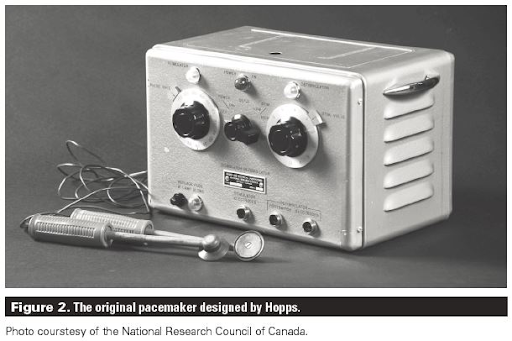
And the automation of medicine has been going on longer than one might think. The first pacemakers — which, as autonomous therapeutic machines, are definitionally medical robots — were implanted into patients in the 1950s. 

Early Pacemaker

Since then, robots have started assisting doctors in a variety of ways to enhance their capabilities and reduce the risk of error. 

The Centers for Disease Control and Prevention (CDC) recently presented data demonstrating that one in every 25 patients will contract an infection while in a hospital — and that one in nine of this portion of patients will die. It recommended the implementation of automated cleaning protocols — led by medical robots — to reduce these risks. 

Between the demand for more sophisticated sanitation solutions and the robust demand for surgical and implanted medical robots, it’s no wonder why research firm Fortune Business Insights projects a 21.5% CAGR for the medical robots industry through 2026. 

Unmanned Aircraft Systems

Unmanned aircraft systems (UAS) — colloquially known as drones — have taken military technology and defense to the next level. These systems have given the military new, innovative ways of gathering intelligence, neutralizing enemies, and protecting soldiers and assets.

Drones have played key roles in almost every significant U.S. military operation of the last 10 years. They fired the missiles that killed notorious ISIS spokesman Mohammed Emwazi, aka Jihadi John, and took the photos that identified Osama bin Laden’s compound. Below is one such drone photo, which was leaked to the press several years ago… 

Drone Image

It’s not hard to see why intelligence firm Markets and Markets has projected a CAGR of 15.5% for UASs through 2025.

As you can see, robot technology is just beginning its meteoric rise — and will see especially strong growth in the industrial, consumer, medical, and military segments. 

1. iRobot Corporation (NASDAQ: IRBT)

IRobot Corporation is a consumer robotics company founded in 1990 by three MIT engineers with space and military robotics backgrounds. 

Today it designs and builds cleaning robots for consumers. Its products automatically complete tasks like vacuuming, mopping, scrubbing floors, and cleaning pools and gutters.

iRobot's most popular product is its Roomba vacuuming robot, which uses an array of cameras to navigate around furniture, walls, and other obstacles as it cleans floors. The Roomba was introduced nearly 20 years ago in 2002, making it one of the first non-toy autonomous robots on the consumer market. 

Today the Roomba controls 82% of the North American robotic vacuum market and 52% of the global market. Yet despite its dominance in the area, iRobot is still quite comfortably valued — and is still finding room for growth. 

As of the most recent quarter, the firm has grown its EPS by 16.72% year over year while growing revenue by 8.07%. It has an extremely low debt-to-equity ratio of 7% and trades for less than 16 times EPS and less than two times sales. 

2. ABB Ltd. (NYSE: ABB)

ABB is a global provider of power and automation solutions. According to engineering magazine Control, it’s the third-largest automation vendor worldwide by revenue thanks to its diverse line of products. 

ABB's YuMi is the first robot to work with people while still maintaining a safe environment. YuMi is a dual-arm robot capable of working in small parts assembly roles, which have previously been difficult to automate. 

The company’s IRB 8700 is a robot designed for heavy payloads. It's 25% faster than any other robot in its size class and provides customers with low-maintenance care and a low total cost to own.

The demand for industrial robots is set to nearly triple over the next decade — and ABB’s market share has been rising within that segment, from 17% in 2015 to nearly 30% today. 

What’s more, the firm is immensely profitable and undervalued, with a return on equity (ROE) above 39% and a price-to-earnings (P/E) ratio of less than 12. 

3. AeroVironment Inc. (NASDAQ: AVAV)

AeroVironment is a California-based developer of unmanned aircraft systems (UAS) for the U.S. military and foreign allied militaries. It has sold at least 25,000 drones to military customers in the 10 years that it has been operating in that industry. 

The company's most popular drone, the lightweight Raven, is the most widely used UAS in the world. It garnered more than $43 million in orders in the last six months alone from a variety of NATO governments. 

Given that the global UAS market is expected to more than double in size by 2025, we can expect AeroVironment’s product line to continue generating blockbuster sales over the next few years. 

AVAV Chart

The firm is nearly debt-free, and investors are starting to take notice of its favorable position — it’s rapidly approaching its all-time high from 2018.