Showing posts with label stocks. Show all posts

Friday, April 10, 2026

Big 6 Tech Stocks Suddenly Look Cheap- Exxon has a higher PE than NVDA?


Exxon Mobil P/E Is Now Higher Than Nvidia — What’s Going On?

2026 has been rough for Big Tech stocks, with many of the major names pulling back significantly.

Why the Drop?

It’s largely driven by massive spending on AI infrastructure (data centers, chips, etc.), which is pressuring profits in the short term.

Investors are starting to question:
When will this actually pay off?

There’s growing skepticism about whether these investments will generate near-term returns, even if the long-term story remains strong.


Valuations Are Coming Down

The underperformance of the technology sector is starting to create attractive valuation opportunities for investors.

As Goldman Sachs strategist Peter Oppenheimer noted:

“The underperformance of the technology sector is also starting to generate attractive valuation opportunities for investors, as its valuation—relative to expected consensus growth—has fallen below that of the global aggregate market.”


Meanwhile… Energy Stocks Are Rising

Because of the current oil rally driven by tensions in the Middle East, oil company P/E ratios have risen sharply—
in some cases even surpassing those of tech stocks.

That leads to a surprising headline:

Exxon Mobil P/E Is Now Higher Than Nvidia — What’s Going On?


A Shift in Valuation Dynamics

Price-to-earnings ratios in tech are falling to more reasonable levels.

In some cases, these stocks are now:

  • Cheaper relative to their own history
  • More in line with (or closer to) the broader market

But “Cheap” Doesn’t Mean Risk-Free

This creates a split narrative:

  • An opportunity (if AI investments pay off), or
  • A value trap (if returns disappoint)
How do 6 of the largest tech companies compare to each other right now?

Tuesday, March 17, 2026

The “Safe” Way to Use Martingale Trading Strategies (Almost Nobody Does This)

Tuesday, March 10, 2026

Agora Financial Review: What They Don’t Want Investors to Know


Agora Financial Review


I think that of all the online trading and investing advice scammers, Agora Financial and its many subsidiaries—which seem to pop up like mushrooms every other month—have to be the worst of the worst.

They target newbies and seniors in retirement who have little to no knowledge of how to trade or invest properly. Across more than a dozen services that I’ve tracked, every single one has underperformed the market, and that doesn’t even include the fees for their subscriptions.

They have also been caught flat-out lying about potential investment ideas many times in the past. The company has been sued many times and has lost nearly every time.

Agora is sneaky, though. It isn’t always obvious that many of their companies are owned by or partnered with them.

For example:

Agora, Inc. is a U.S.-based publisher of financial newsletters such as The Oxford Club and Wall Street Daily. Meanwhile, Agora Dealer Services Corp. operates as a Canadian wealth platform for advisors, providing technology and custody services. Both use the “Agora” brand, but they serve different markets.

The U.S. group focuses on direct-to-consumer financial media, while the Canadian entity focuses on B2B wealth management services, offering investment platforms, reporting tools, and back-office support for independent advisors.

Some of the other associated publishing brands include:

  • Southbank Research

  • Paradigm Press

Around 2021, Agora reportedly changed its name to Monument and Cathedral Holdings, likely due to the negative press from numerous lawsuits and fines levied against it by government regulators.

They also sold off Agora Financial to a company called MarketWise, which went public in 2021. MarketWise was run by many of the same people who had been running Agora Financial. MarketWise is now publicly traded under the ticker MKTW.

After changing its name, Agora now appears to be trying to reintegrate Agora Financial by buying it back, suggesting that the various name changes and corporate restructuring may simply be part of an ongoing rebranding effort.

-----------------------------------

sources

https://www.forbes.com/sites/emilybaker-white/2025/07/07/this-secretive-company-built-an-empire-by-hawking-bad-financial-and-health-advice-on-facebook/

https://truthinadvertising.org/brands/agora/#:~:text=A%20Stipulated%20Order%20is%20entered,(formerly%20known%20as%20Agora%2C%20Inc.

https://www.youtube.com/watch?v=y0Ga87FNE6U&t=3s

https://truthinadvertising.org/brands/agora/

Friday, February 27, 2026

Why U.S. Bank Stocks Are Falling Sharply Today. How To Use This Information Right Now!


Why U.S. Bank Stocks Are Falling Sharply Today.  How To Use This Information Right Now!


Friday feb 27 2026 

U.S. bank stocks are under heavy selling pressure, and the trigger appears to be growing concerns about credit quality in parts of the financial sector.

The decline followed a report from FS KKR Capital Corp., an investment fund tied to private-equity giant KKR, which revealed a notable rise in troubled loans along with a drop in net income. That update spooked investors, raising fears that loan defaults could start climbing across the broader banking industry.

Because banks are closely tied to lending activity, any indication that borrowers are struggling tends to hit the sector quickly. Investors often see rising bad loans as an early warning sign of potential losses and tighter financial conditions ahead.

As a result, traders moved to reduce exposure to financial stocks, sending shares of major banks lower in today’s session. The selloff reflects worries that credit problems seen in one part of the market could spread more widely if economic conditions weaken or if higher interest rates continue to strain borrowers.

In short, the drop in bank stocks is being driven by renewed concerns about loan performance and the possibility that the financial sector could face tougher conditions in the months ahead.


You can use the information about the selloff in U.S. bank stocks in different ways depending on whether you're thinking short-term trading or long-term investing/strategy.


Short-Term Uses (Trading / Market Timing)

1. Trade the Volatility

When negative news hits the banking sector, volatility often spikes in stocks like JPMorgan Chase, Bank of America, and Citigroup.
Short-term traders might:

  • Short bank stocks or financial ETFs.

  • Trade quick rebounds after oversold conditions.

  • Use options strategies (puts or volatility trades).

2. Watch Credit-Risk Signals

If a lender like FS KKR Capital Corp. reports rising problem loans, it can act as an early warning indicator for:

  • Regional banks

  • Credit markets

  • High-yield debt

Traders often monitor whether the selloff spreads to:

  • Small banks

  • Commercial real estate lenders

  • High-yield bonds

3. Sector Rotation Opportunities

Money sometimes moves out of financials and into defensive sectors such as:

  • Utilities

  • Consumer staples

  • Gold or bonds

Short-term traders can follow that rotation.


Long-Term Uses (Investing / Macro Strategy)

1. Identify Potential Buying Opportunities

Bank stocks often fall sharply during credit scares but recover later. Long-term investors might:

  • Accumulate quality banks at discounted valuations.

  • Focus on institutions with strong balance sheets and diversified income streams.

Historically, large banks tend to recover once credit fears stabilize.

2. Gauge the Economic Cycle

Rising delinquent loans can signal:

  • A slowdown in the economy

  • Stress in certain sectors (like commercial real estate)

  • Tightening credit conditions

This information helps with macro positioning in:

  • Stocks

  • Real estate

  • Bonds

3. Adjust Portfolio Risk

If credit issues are spreading, long-term investors might:

  • Reduce exposure to cyclical sectors.

  • Increase cash or defensive assets.

  • Focus on companies with strong cash flow.

4. Track Structural Changes in Banking

If this trend continues, it may signal:

  • Stricter lending standards

  • Lower loan growth

  • Shifts toward private credit markets

That can change where capital flows in the future.


In simple terms:

  • Short term: Use it for volatility, trades, and sector rotation.

  • Long term: Use it as a signal about the economy and potential buying opportunities in banks.

Thursday, January 29, 2026

Meta Ai News Today- Reasons For 2025 Q4 blowout

Meta Ai News Today- Reasons For 2025 Q4 blowout

 Meta Platforms (META) is back in full bull mode.

Wall Street rushed to raise price targets after Meta crushed Q4 expectations, driven by surging ad demand and early—but increasingly measurable—returns from its massive AI investments.

Shares jumped more than 8% in premarket trading Thursday, as analysts piled in with fresh upside calls.

Big Banks Go Bigger on Meta

  • Barclays raised its price target to $800 from $770, citing a sharp rebound in advertising momentum. Revenue growth north of 30%, the firm said, has eased lingering concerns around rising costs and capital intensity.

  • UBS boosted its target to $872 from $830, maintaining a Buy rating and forecasting higher earnings estimates for 2026 and 2027 as AI monetization accelerates.

  • Bank of America lifted its target to $885 from $810, reaffirming its Buy call and pointing to tangible returns from Meta’s investment cycle.

Morgan Stanley, Jefferies, and Piper Sandler also raised targets, with Jefferies noting that Meta’s revenue surge confirms AI-driven growth is finally validating years of heavy spending.

Q4 Numbers That Changed the Narrative

Meta posted Q4 revenue of $59.89 billion and EPS of $8.88, blowing past analyst estimates of $58.59 billion and $8.02, according to Fiscal AI data.

That performance is shifting sentiment fast.

Barclays emphasized that Meta remains the undisputed leader in digital advertising, with AI providing additional upside not yet fully reflected in forecasts.

AI Payoff Is Starting to Show

UBS expects Meta’s AI strategy to materially lift earnings power over the next two years, while Bank of America highlighted the company’s ability to fund expansion internally as free cash flow is projected to turn positive in 2026.

BofA also noted that Reality Labs losses are likely to peak this year, removing another long-standing overhang on the stock.

Bigger Bets Ahead

Meta signaled it’s not slowing down.

The company plans to ramp capital expenditures sharply in 2026, projecting $115 billion to $135 billion in spending—up from roughly $72 billion in 2025—doubling down on AI infrastructure and long-term growth.

Bottom line: Wall Street is starting to believe Meta’s AI gamble is paying off—and the price targets suggest analysts think this run is far from over.

Tuesday, January 13, 2026

XAIR Stock-Beyond Air Inc is up over 200% today and Why


XAIR Stock-Beyond Air Inc is up over 200%  today and Why

We are still in a bull market, and overall sentiment remains strongly bullish.

All that’s needed now is news of FDA approval for LUNGFIT-2, along with updates on advancement studies from the Beyond Cancer subsidiary. There is far more to this company than many realize.


We are still in a bull market, and overall sentiment remains strongly bullish.

All that’s needed now is news of FDA approval for LUNGFIT-2, along with updates on advancement studies from the Beyond Cancer subsidiary. There is far more to this company than many realize.

That’s the real catalyst behind today’s surge.

The next question is: where does it go from here?

Insider ownership stands at approximately 61–62%, which is a strong vote of confidence.


Monday, January 5, 2026

3 Robot Stocks to Consider


3 Robot Stocks to Consider

Half a century ago, robots existed mostly as a science fiction trope — but today, they’re a very real part of our economy. Robots are currently toiling in our factories, cleaning our homes, performing our surgeries and protecting our soldiers. And their meteoric rise is just beginning. 

According to the Boston Consulting Group, industrial robots currently perform about 10% of all manufacturing tasks. But by 2025, that share will jump to 25%. As we’ll discuss in this report, researchers have forecast similar growth rates for consumer, medical and military robots as well. 

And despite the pervasive media narrative that the rapid rise of robots will cause massive job losses, data suggests that it’s actually a net creator of jobs. In fact, according to research by Metra Martech, each new industrial robot deployed adds an average of 3.6 jobs to the economy. 

The growth in the global robot population is expected to be strong across the board in the next few years — but there are certain sectors in which it’ll be especially apparent… 

Industrial Robots

The International Federation of Robotics (IFR) reports that in 2020, the worldwide industrial robot population hit a record of 2.7 million — with roughly 70% working in the automotive, electronics, and metal machinery industries.

robots responsive

The report showed that sales of new industrial robots had slowed slightly in 2019 — but the annual total of 373,000 units was still the third-highest sales volume ever recorded. 

According to Loup Ventures, the market for industrial robots is expected to grow by 175% from 2017–2026 — and it’s easy to see why. They free up human workers from dangerous or tedious jobs and work at a far faster pace than most humans can. 

Robots for Consumer Use

Of course, robots aren't limited to being used in industrial and manufacturing settings. The demand for service robots for consumer use has also grown significantly in recent years.

The rise of the “smart home” over the last few decades has been a major driver of consumer robot demand. 

Smart Home Interest

As people connect more and more of their home systems and appliances to the internet, more and more products are being developed to automate cleaning and other home care tasks. 

That’s a significant part of the reason why research firm Market Research Future projects that the global consumer robotics market will enjoy a compound annual growth rate (CAGR) of around 19% through 2023. 

Robots in Medicine

Robots are also playing an increasingly important role in medical technology and health care. Robots provide medical professionals with a heightened level of precision in their operations and help to improve patient care, save costs, and reduce waste.

And the automation of medicine has been going on longer than one might think. The first pacemakers — which, as autonomous therapeutic machines, are definitionally medical robots — were implanted into patients in the 1950s. 
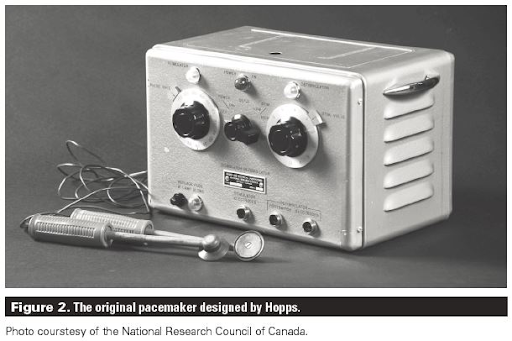
Early Pacemaker

Since then, robots have started assisting doctors in a variety of ways to enhance their capabilities and reduce the risk of error. 

The Centers for Disease Control and Prevention (CDC) recently presented data demonstrating that one in every 25 patients will contract an infection while in a hospital — and that one in nine of this portion of patients will die. It recommended the implementation of automated cleaning protocols — led by medical robots — to reduce these risks. 

Between the demand for more sophisticated sanitation solutions and the robust demand for surgical and implanted medical robots, it’s no wonder why research firm Fortune Business Insights projects a 21.5% CAGR for the medical robots industry through 2026. 

Unmanned Aircraft Systems

Unmanned aircraft systems (UAS) — colloquially known as drones — have taken military technology and defense to the next level. These systems have given the military new, innovative ways of gathering intelligence, neutralizing enemies, and protecting soldiers and assets.

Drones have played key roles in almost every significant U.S. military operation of the last 10 years. They fired the missiles that killed notorious ISIS spokesman Mohammed Emwazi, aka Jihadi John, and took the photos that identified Osama bin Laden’s compound. Below is one such drone photo, which was leaked to the press several years ago… 

Drone Image

It’s not hard to see why intelligence firm Markets and Markets has projected a CAGR of 15.5% for UASs through 2025.

As you can see, robot technology is just beginning its meteoric rise — and will see especially strong growth in the industrial, consumer, medical, and military segments. 

1. iRobot Corporation (NASDAQ: IRBT)

IRobot Corporation is a consumer robotics company founded in 1990 by three MIT engineers with space and military robotics backgrounds. 

Today it designs and builds cleaning robots for consumers. Its products automatically complete tasks like vacuuming, mopping, scrubbing floors, and cleaning pools and gutters.

iRobot's most popular product is its Roomba vacuuming robot, which uses an array of cameras to navigate around furniture, walls, and other obstacles as it cleans floors. The Roomba was introduced nearly 20 years ago in 2002, making it one of the first non-toy autonomous robots on the consumer market. 

Today the Roomba controls 82% of the North American robotic vacuum market and 52% of the global market. Yet despite its dominance in the area, iRobot is still quite comfortably valued — and is still finding room for growth. 

As of the most recent quarter, the firm has grown its EPS by 16.72% year over year while growing revenue by 8.07%. It has an extremely low debt-to-equity ratio of 7% and trades for less than 16 times EPS and less than two times sales. 

2. ABB Ltd. (NYSE: ABB)

ABB is a global provider of power and automation solutions. According to engineering magazine Control, it’s the third-largest automation vendor worldwide by revenue thanks to its diverse line of products. 

ABB's YuMi is the first robot to work with people while still maintaining a safe environment. YuMi is a dual-arm robot capable of working in small parts assembly roles, which have previously been difficult to automate. 

The company’s IRB 8700 is a robot designed for heavy payloads. It's 25% faster than any other robot in its size class and provides customers with low-maintenance care and a low total cost to own.

The demand for industrial robots is set to nearly triple over the next decade — and ABB’s market share has been rising within that segment, from 17% in 2015 to nearly 30% today. 

What’s more, the firm is immensely profitable and undervalued, with a return on equity (ROE) above 39% and a price-to-earnings (P/E) ratio of less than 12. 

3. AeroVironment Inc. (NASDAQ: AVAV)

AeroVironment is a California-based developer of unmanned aircraft systems (UAS) for the U.S. military and foreign allied militaries. It has sold at least 25,000 drones to military customers in the 10 years that it has been operating in that industry. 

The company's most popular drone, the lightweight Raven, is the most widely used UAS in the world. It garnered more than $43 million in orders in the last six months alone from a variety of NATO governments. 

Given that the global UAS market is expected to more than double in size by 2025, we can expect AeroVironment’s product line to continue generating blockbuster sales over the next few years. 

AVAV Chart

The firm is nearly debt-free, and investors are starting to take notice of its favorable position — it’s rapidly approaching its all-time high from 2018.


Monday, March 10, 2025

5 Stocks to BUY in March/April 2025


Mar10 2025 430pm

In the beginning of March we are still in a downturn, which could mean a good buying season in March/April. Here to break down five stocks he's looking to buy in March is Trading Post's analyst, Jason Wade

Today the S&P closed below the 200sma, a common technical level used by institutions. The threat of an escalating tariff war has investors being cautious. We've clearly had a sharp sell off since the beginning of February but it isnt all bearish. There's always a risk of it going deeper, but if President Trump was to come out and cease tariffs the market would rally. If the CPI print this week is bullish it could be a trigger for buyers also

I would expect to see the market trend sideways within this range if not bounce higher and potentially set a new all-time high by early to mid-spring.

The seasonality of the index's also usually hits a low around the end of february then rallies in late mar


1)NVDA Nvidia just had another great ER. Keeping inline with its previous ER's though its sold off just after it was released. It's likely from the unwinding of speculative positions.

This presents longerterm investors an entry point


Its hard to find an analyst that doesn't have something good to say about it. They're raising price targets leading to new all-time highs. A major growth kicker the analysts are talking about is the strength in the automotive segment. Its still small right now but  analysts are predicting it could become their next billion-dollar business, supported by robotics, driver assist, and autonomous vehicles.

2)CRM -Salesforce just had a good ER also.  Yet its stock price pulled back a little bit. That was because of the guidance. But the takeaway from the analyst chatter is that the company is being cautious—and prudently so—in the scaling of its new technologies.

 It has really robust cash flow that's driving some significant capital returns. 

The analysts are bullish. They did trim their price targets, but the range of targets is narrowing around the consensus, which is looking for a double-digit upside.

3)MMM-3m was a dividend king that's been dethroned. It had to cut its dividend to mitigate the impacts of some legal issues. Those legal issues are behind it now. Dividend increases are back on the table. Share repurchases are back on the table. Organic business is growing. The guidance is very robust. The stock is coming back very strongly.

Right now technically it looks very strong espeically in how its perfoemed agins the majority of the market

4)SOUN-SoundHound.got a really big boost last year as the AI wave was coming into play. The stock price pulled back, and then it pulled back even more sharply when Nvidia announced it had sold out of its stake.

So that's kind of a shock to investor sentiment. But if you look back and see that Nvidia made more than 100% gains in under a year, it's pretty easy to understand why they would sell.

That aside, the fundamentals are unchanged. The company is looking at a period of hypergrowth—growing at nearly 100% pace for the next few quarters, if not for the next two years.

Its currently consolidating around 8.50 Technically I'm watching 7.25 for a bounce if it breaks below this level.


5)SHOP-Shopify. It is the most upgraded stock from February. That’s because of outperformance and better-than-expected guidance.


Right now technically its still above the 200daily sma and is close to completeing a gap fill.An excellent opportunity for longer term investors.

Thursday, September 7, 2023

Best Tech Stocks Dividend 2026

Best Tech Stocks Dividend 2026


Dividend-paying tech stocks represent a unique and increasingly attractive investment opportunity in the ever-evolving world of technology. Traditionally, the tech sector has been associated with rapid growth and capital appreciation, often at the expense of regular dividend payouts. However, many established tech giants have matured to a point where they generate significant cash flows, allowing them to reward shareholders with consistent dividends. 

These companies have managed to strike a balance between innovation and financial stability, making them appealing to both growth-focused and income-seeking investors. By investing in dividend-paying tech stocks, investors can not only benefit from potential capital gains driven by technological advancements, but also enjoy a steady stream of income, providing a level of stability in an otherwise dynamic industry.

One key advantage of dividend-paying tech stocks is their ability to provide a hedge against market volatility. In times of economic uncertainty or market downturns, these stocks tend to offer a degree of resilience. This is because they often have strong fundamentals, diversified revenue streams, and robust cash reserves, allowing them to weather economic storms more effectively than their non-dividend counterparts. 

Additionally, the regular income from dividends can be reinvested or used to cover expenses, providing investors with a sense of financial security. Moreover, these tech companies typically have a track record of consistent performance, indicating a level of operational maturity and reliability. This combination of growth potential and income stability positions dividend-paying tech stocks as an intriguing option for a wide range of investors looking to navigate the dynamic landscape of the technology sector.


Oracle (ORCL)

Oracle, a multinational IT corporation, specializes in computer hardware and enterprise software products. Renowned for its database management systems, Oracle commanded a 50% market share in this domain in 2011. The company also excels in crucial areas such as enterprise resource planning, customer relationship management, and supply chain management software. While its dividend may be on the modest side, Oracle remains a robust stock. Notably, it was a favored choice among hedge funds and institutional investors, as indicated by 13F filings.


Microsoft (MSFT)

Microsoft, the world's largest software maker, has been at the forefront of operating system development since the introduction of MS-DOS in the 1980s. Its foray into the mobile computing sector with Windows Phone 7 and Windows 8 underscores its ongoing market presence. Boasting substantial revenue and stability, Microsoft offers an attractive 3.36% dividend yield. This, combined with its industry-leading status, makes it an appealing option for investors seeking long-term stability.


Intel (INTC)

As the foremost semiconductor chip manufacturer by revenue, Intel is pivotal to modern electronics. Its leadership in microprocessor production, alongside a diverse product range, positions it as a key player in the industry. Intel commands significant market share in microprocessors worldwide, as affirmed by International Data Corporation. Despite challenges, Intel remains an industry leader, and its dividend yield remains noteworthy.


Cisco (CSCO)

Cisco Systems specializes in designing, producing, and selling networking equipment, essential for electronic communication over networks. While some argue that it no longer holds its former bellwether status, Cisco's substantial cash reserves of over $50 billion offer a cushion. Moreover, since initiating dividend payouts in 2011, the company has consistently increased them, indicating a strong financial position and commitment to shareholders.


Apple (AAPL)

Renowned for its consumer electronics and personal computing devices, Apple's relatively modest 3% annual dividend yield complements its industry leadership. While concerns about market saturation persist, projections of a 20% annual growth rate for the next five years signal continued potential. Apple's debt-free status and substantial cash reserves of over $145 billion further enhance its appeal.


Texas Instruments (TXN)

As the third-largest semiconductor manufacturer globally and a significant supplier of cellular handset chips, Texas Instruments has a resilient dividend history since 1962. With semiconductors constituting the bulk of its revenue, the company plays a vital role in the industry.


Corning (GLW)

Corning specializes in manufacturing glass, ceramics, and related materials, primarily for display, environmental, and telecommunications technology. Despite fluctuating revenue and net margins, a 20% increase in the company's quarterly common stock dividend in 2012 reflects growing confidence in its potential.


Hewlett-Packard (HPQ)

As a multinational IT corporation, Hewlett-Packard offers software solutions and services across various sectors. While it once held the largest market share in PC manufacturing, the company's diverse product range includes enterprise solutions, servers, storage devices, and imaging products. Despite recent challenges, its dividend potential could be a valuable asset for shareholders if it successfully navigates the competitive PC market.


Monday, August 14, 2023

IWM-The Market is posied for a smaller correction until Oct.

IWM

Fundamental factors
Summer is traditionally known as a slow period for the markets in general.  

Usually there is a smaller rally in July followed by a selloff in late august and Sept as everyone knows historically has been very bearish. 

Looking at the 2 charts below you can see in the first which is the de-trended seasonality for IWM shows that mid august to mid Sept there has been a rally. September then there has been a sharp selloff. And then the market pivots and starts the bull rally again.
Taking the election cycle into account as well you can see that we are entering a cooling off period that historically has lasted until mid December.


Technical factors

Technically looking a the IWM chart you can see that we are testing the trend-line right now. A break below that and I would be looking for a retest of the 186.50 support and then the 180-183 demand zone. Its already tested that resistance area from the previous 2 highs and failed the test both times. Taking the other factors into account i don't think we'll see a 3rd retest until at least October

Other Factors
If you further take into account that the last CPI number released on August 10  was higher than expected. major catalyst for this selloff the last 2 weeks could come in even higher in September. This could easily add the the already bearish bias. The FED might still raise rates likely in late 2023 or early 2024 if this trend continues.


Sunday, January 22, 2023

2 Bluechip Ideas For Jan 23 2023

 1)PEP- Hitting that  longerterm trendline on the weekly along with a hammer candle on the daily for friday combined with above average bullish volume 


2)JNJ. Not really showing any signs of a reversal yet but getting close to several major support areas and with the Earnings release this week on the tues the 24th it may provide the catalyst needed to reverse this current bear trend

Volume Breakouts For Jan22 2023

 Here are 4 Volume Breakout ideas for Monday Jan 23


1)Wayfair

2)CVII


3)Ally


4)Goog